Read the city from the harbor
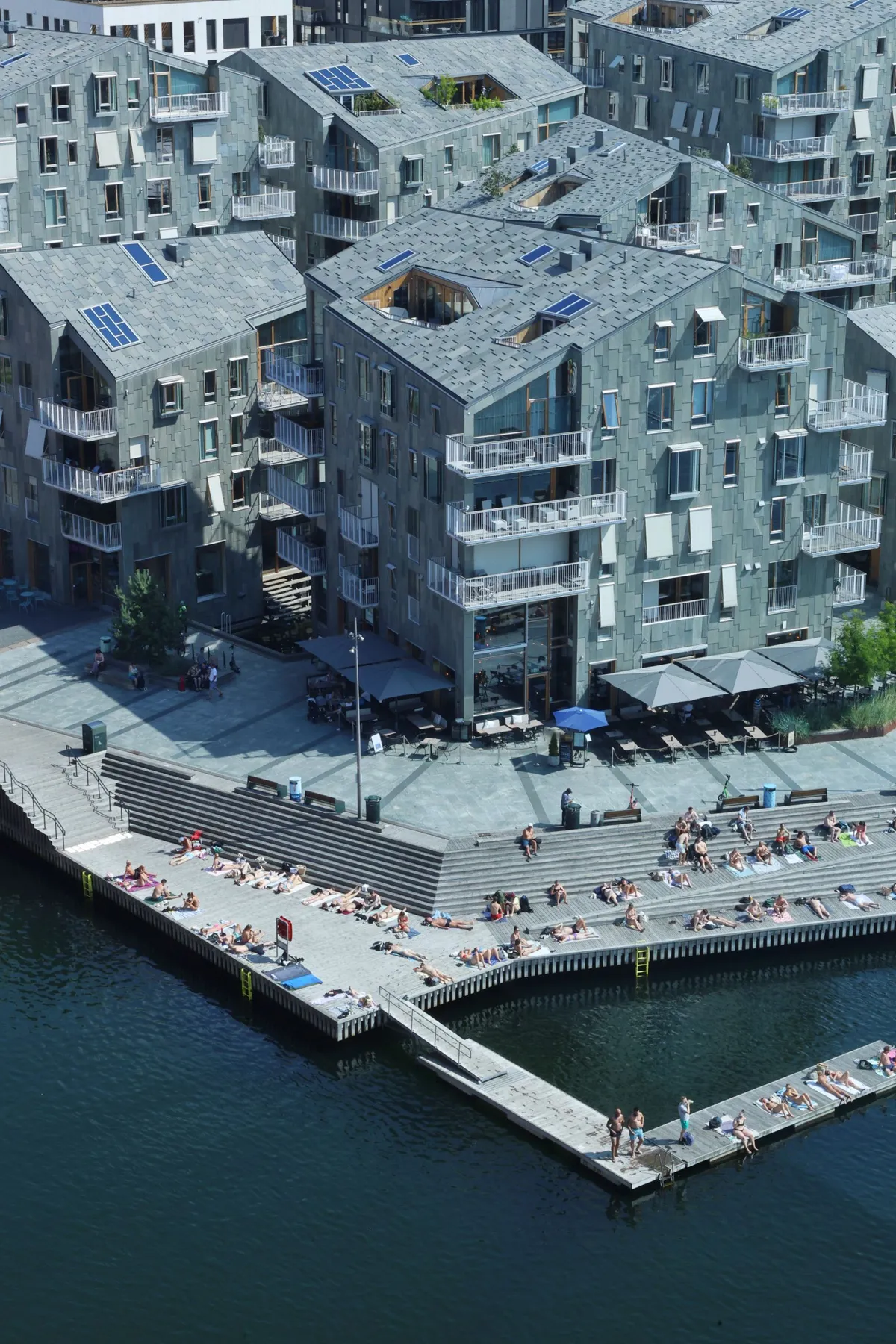
The harbor promenade links several of Oslo's newer and older waterfront settings. Choose a section around the Opera House and Bjørvika, or another around Akershus and the western waterfront, instead of planning to complete every stretch. The architecture and relationship with the fjord are the attraction; distance is not the measure of a successful visit.
An indoor collection near your route can provide the day's main focus. Check the current exhibition and entrance arrangements, then leave time outside to see how the building meets the water. Do not assume that every roof, terrace or quay is accessible in all weather. Follow barriers and signs, particularly when surfaces are wet or icy.
A green outing changes the equipment
For woodland time, choose a clearly described route with a known transport connection and a sensible turnaround point. Paths beyond the central streets can be muddy, uneven or affected by snow and ice. Check daylight and local conditions before leaving, and wear footwear suited to the ground rather than the museum you visited that morning.
You do not need a long hike to understand Oslo's proximity to nature. A shorter, well-chosen route near a reliable return connection may fit a city trip better. Carry water, a suitable layer and enough phone battery for navigation; do not rely on a café being open at the exact point where you expect to stop.
A hillside park can offer an intermediate option between harbor pavement and a forest outing, but it still deserves a terrain check. If visibility is poor or the surface is unsuitable, choose a lower-level walk instead. The fact that local residents use a route regularly does not establish that it suits every visitor in every season.
Keep two distinct rhythms
Put the waterfront and woodland on separate days when your stay allows. This avoids carrying unnecessary outdoor equipment through museums or arriving at a trail late because an exhibition took longer than expected. On a shorter visit, choose one substantial green interval and resist adding another distant attraction afterwards.
Oslo's strongest contrast is between its urban fjord edge and the landscape beyond. You can experience that contrast without rushing between both in a single afternoon. A clear return plan makes the outdoor portion feel like part of a holiday rather than a transport problem discovered after sunset.