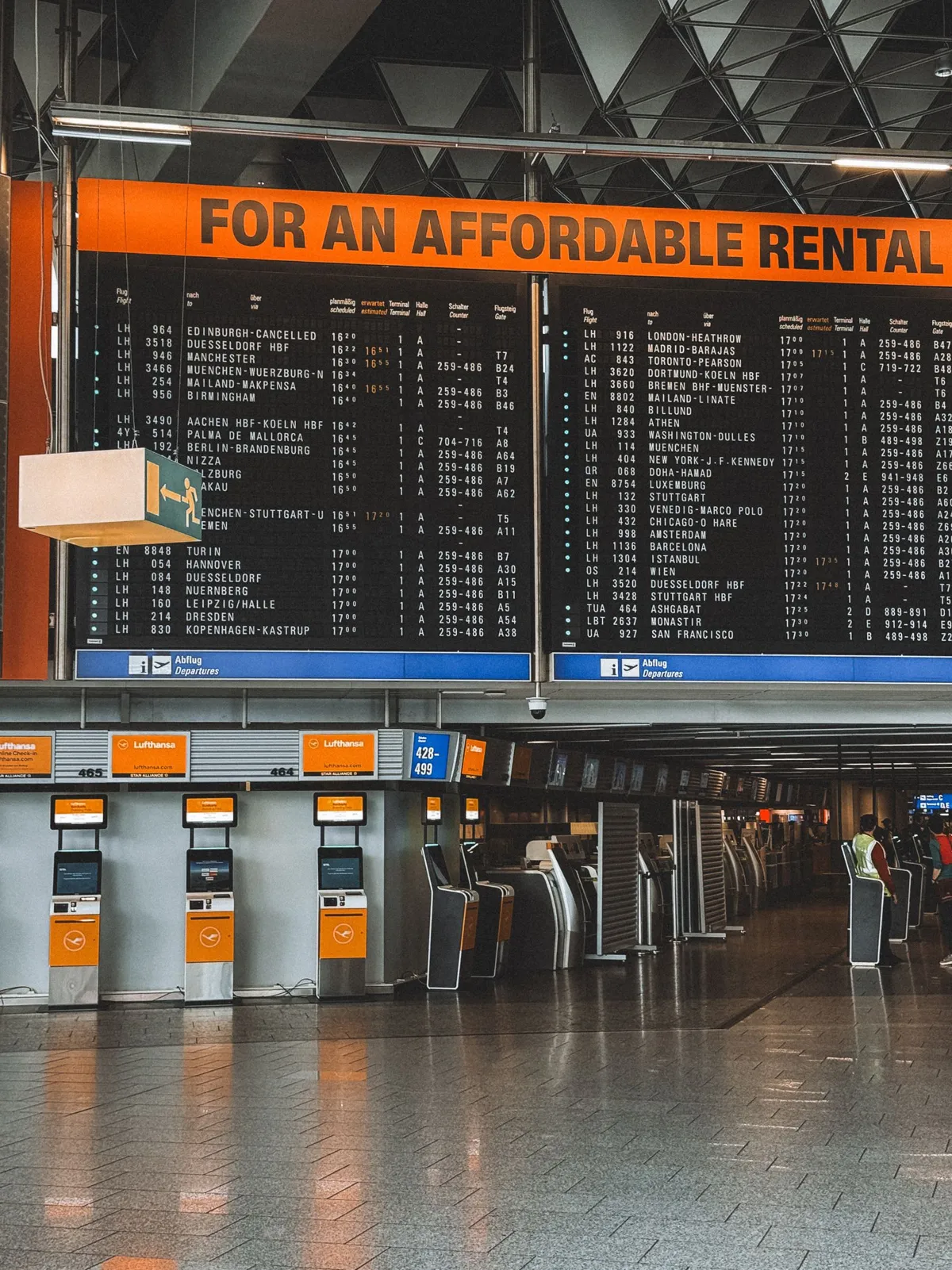
Confirm the operational situation
Check the operator's official notice, departure board or staffed help point. Establish whether the service is delayed, canceled, moved to another platform or replaced by another mode. A late notification in a third-party app may not reflect the latest instruction.
Keep the booking reference, ticket and original itinerary available. If the journey has several operators, identify which one controls the disrupted leg and which seller issued the booking. This makes a request for help more precise than simply saying your trip no longer works.
Ask what continuation is authorized
Find out whether you should wait, use another departure or obtain a replacement reservation. Do not assume your ticket is valid on any train or flight heading in the same direction. If the alternative requires approval, retain the written confirmation where possible.
Passenger rights depend on the transport, jurisdiction and booking arrangement. The EU's rail guidance, for example, differentiates through-ticket journeys and individual tickets. Use the official rules for your case rather than treating a general travel article as a guarantee of compensation or accommodation.
Stabilize the next few hours
Tell the accommodation or person expecting you that the arrival may change. If reception has limited hours, ask how to preserve access. Consider food, water, a charged phone and a suitable place to wait before trying to rebuild every later activity.
When an overnight stay becomes necessary, ask the operator what arrangements it will provide or approve. Keep receipts and records, but remember that saving a receipt does not by itself establish reimbursement. Avoid purchasing expensive replacements before understanding the available assistance unless your immediate circumstances require a different decision.
Simplify the remainder
Remove an optional excursion or timed attraction if it would create another fragile connection. A direct later service can be preferable to several rapid changes that depend on perfect operation. Compare the arrival at the actual destination, not merely the earliest departure from where you are standing.
Record what happened while the details are fresh: service number, scheduled time, notices and instructions received. Resolve formal claims through the relevant operator afterward. During the disruption, the priority is a valid onward route and a workable arrival, not winning every minute back from the original plan.