Choose the night with enough drying time
A two-night stay is usually easier for laundry than an overnight stop followed by an early departure. Check whether the accommodation offers a machine, a service or a permitted place to hand-wash small items. Do not assume a bathroom sink or balcony can be used in any way you like.
Look at what you intend to wash. A few lightweight socks and undergarments are a different job from heavy trousers. Follow fabric care labels, including temperature and drying restrictions. If an item takes a long time to dry at home, do not expect it to become magically convenient in a small room with limited airflow.
Keep the kit proportionate
For a small hand-wash, an appropriate amount of suitable detergent and a bag for separating worn clothing may be enough. Check liquid transport limits if you carry liquid detergent. Keep it clearly identified and away from food or toiletries that could be confused with it.
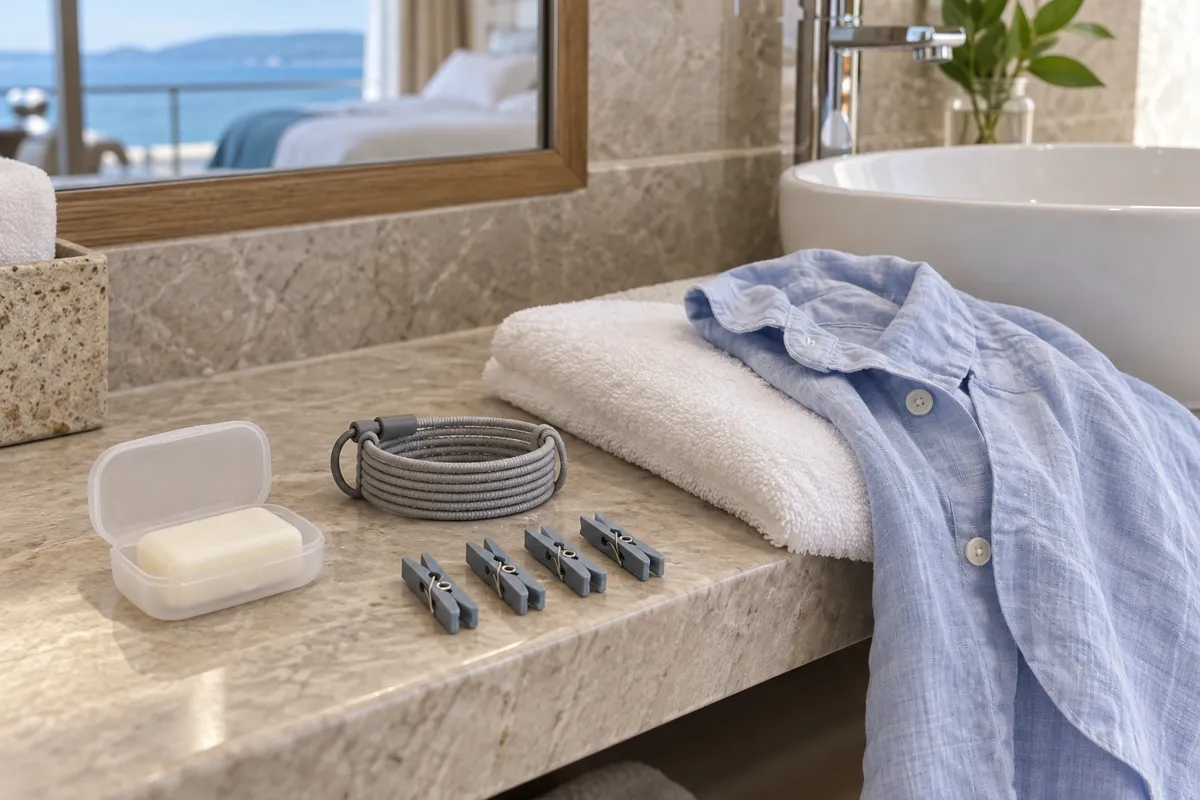
A travel line is useful only where there is a safe, permitted way to hang it. Do not attach it to sprinklers, heating equipment or fixtures that are not designed to carry a load. Ask the accommodation about a drying rack rather than improvising something that could damage the room. Avoid carrying accessories for facilities you will never use.
Leave room for an unfinished wash
Wash early enough to assess the result before bedtime. If clothing is still damp in the morning, keep it separate for the transfer and unpack it promptly at the next stop. A sealed bag contains moisture; it does not dry the garment. Never leave wet laundry closed inside luggage longer than necessary.
For a large load, using a laundromat may be more efficient than filling the room with wet clothes. Allow time to understand the machine instructions and remain available for the cycle. Keep a small outfit reserve so a delayed wash does not dictate the next day's plans. Laundry is a tool for reducing luggage, not a reason to pack so little that every evening becomes a washing appointment.