Remove what moisture you can first
Give wet items time to drain or air before departure when possible. Follow the garment's care instructions rather than aggressively twisting a delicate fabric. Use an appropriate towel if available and permitted, but do not leave hotel furnishings wet or use heat sources in ways the property has not approved.
Keep shoes and heavily soiled items separate from clothing. Water trapped in a shoe can escape when the bag changes orientation, so do not rely on placing it at the bottom of the suitcase. If there is no time to dry it, use containment that can tolerate the moisture and plan to open it soon after arrival.
Containment is temporary
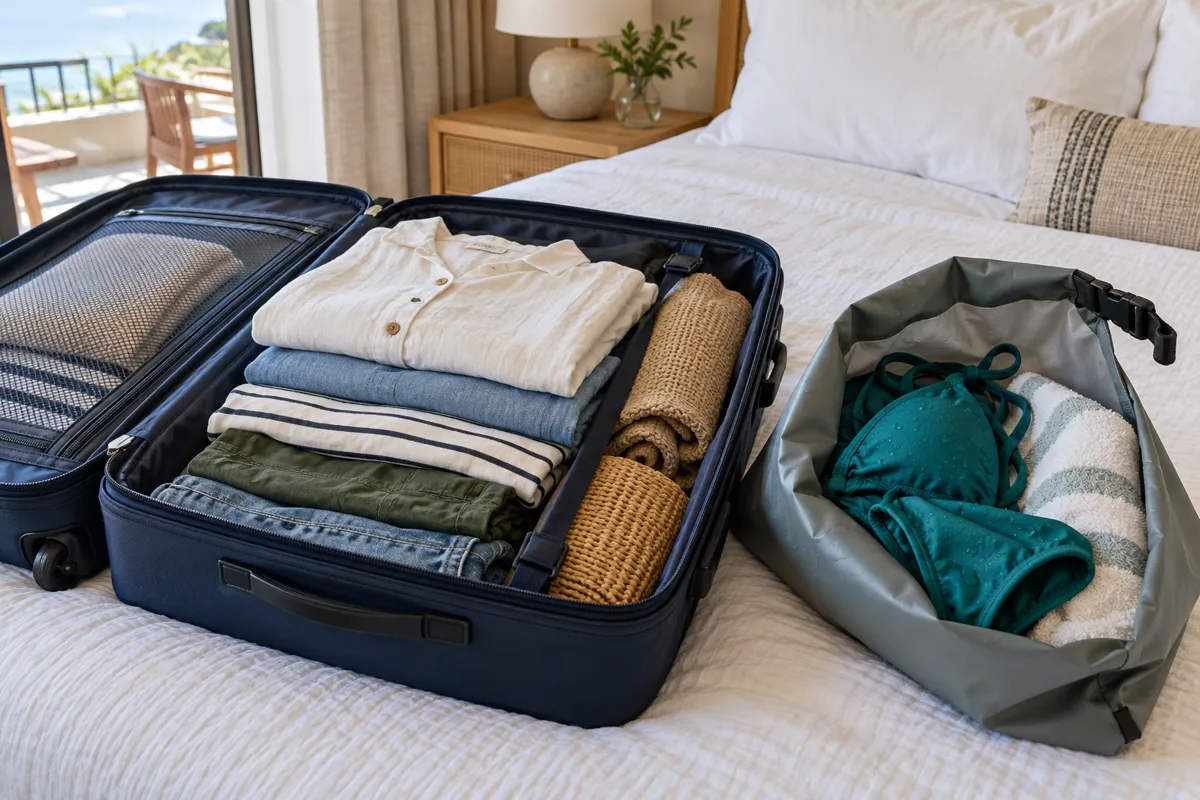
A dedicated wet pouch or a sound reusable bag can keep damp fabric away from electronics and clean garments. Check the closure and seams rather than assuming a bag is waterproof because its surface looks coated. Wrap nothing so tightly that a sharp fastener or shoe edge punctures the material.
Place the contained item where you can remove it without unpacking the whole case. Do not put it beside documents or an unprotected laptop. If you use a separate pouch inside your main bag, remember that it still contributes to the total packed size and weight; wet fabric can be noticeably heavier than dry fabric.
Unpack before you settle in
Make the wet-item pouch the first thing you remove at home or the next accommodation. Open it and dry or wash the contents as their care labels require. Air the pouch itself before storing it. Leaving the entire suitcase zipped shut until the following weekend defeats the purpose of careful separation.
For the next trip, consider the timing of the final swim, laundry session or outdoor activity. Moving a wash earlier may be more useful than buying a more elaborate bag. Keep one small flexible pouch available for the unexpected, but do not treat it as a long-term storage system. The simplest successful routine is to isolate the moisture, remember where it is and deal with it promptly.